The Power of Radio

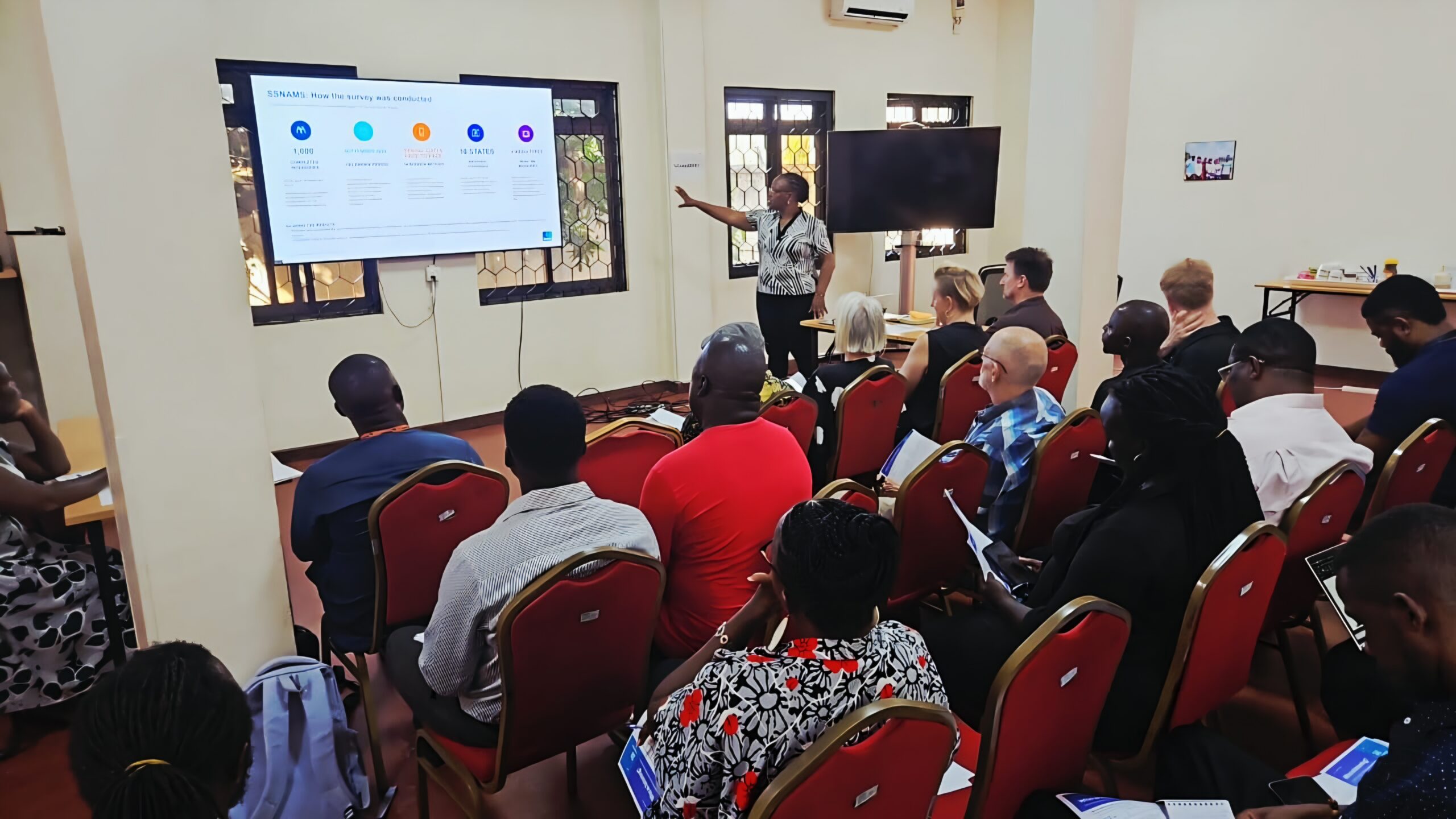
Until this week, South Sudan had no official national measure of who listens to what, where and how often. Planners, broadcasters and development partners have had to work from assumptions. That changed when Ipsos released the South Sudan National Audience Measurement Survey (SS-NAMS) in Juba, produced in partnership with EARS and GIZ.
What the survey covered
SS-NAMS interviewed 1,000 adults aged 15 and above across all ten states, in urban and rural locations. Interviews took place in September 2026, in English or Juba Arabic, by telephone (69%) and face to face (31%). Weighted results represent an estimated 6.6 million people aged 15+. The study measured radio, television, newspapers and internet use.
Radio reaches the most people
Weekly radio reach was 78.5%, measured as adults who used the medium for at least 15 minutes in the past seven days. That is the broadest weekly reach of any medium in the study. Television reached 46.2% and newspapers 32.1%. Social media (66.8%) and messaging apps (66.2%) also reach large audiences, adding a digital layer on top of radio.
Access shapes how people listen
83% of the weighted population lives in rural areas, and grid electricity access is limited. Battery-powered, solar-powered, shared and mobile devices therefore play a central role in how people listen. Radio’s weekly reach is comparable in both settings, at 78.8% in rural areas and 77.2% in urban areas. The difference lies in habit. Yesterday’s listening was higher in rural areas (66.0%) than in urban areas (53.3%).
One country, ten radio markets
Weekly radio reach ranges from 57.7% in Central Equatoria to 91.9% in Warrap, and six states exceed 80%. Which stations people turn to also changes from state to state. National scale therefore has to be paired with local relevance, including language, presenters and community connection. This article describes the pattern rather than ranking individual stations.
Radio works in short, repeatable sessions
On a typical weekday, 59.2% of radio users listen for up to an hour, compared with 33.2% for television. Radio suits concise messages, reminders and repeated exposure across the week. Ipsos’ guidance is that radio can lead awareness or multiply the impact of television, digital and field activity, depending on the objective.
Reach starts the plan, but does not finish it
The survey’s guidance is clear. Use weekly reach (P7D) as the primary planning currency, and treat daily use as a habit diagnostic. Then layer in audience profile, state, daypart, frequency and budget. Radio’s reach is strongest from age 30, while younger audiences respond well when radio is paired with social media and messaging.
Read the numbers carefully
Digital results reflect self-reported platform use. They are not official internet penetration or device ownership. Findings for small subgroups should be read alongside their unweighted sample bases.
What this means for the market
For advertisers and institutions, the survey makes it possible to start from a clear objective, match it to the right audience and state, and measure delivery against it. For broadcasters, verified reach and frequency can strengthen packages and rate cards that were previously built on assumption.
Thank you to Ipsos, GIZ and everyone who made this study possible.
Ready to plan with evidence? Speak to the EARS team